

The Alent Dynamic® Method
Discover why our automated dynamic wood drying process outperforms the competition through cutting-edge science.

Wood drying, redefined
Conventional wood drying has changed little in over fifty years. It’s still energy-intensive, time-consuming, and often inefficient.
At Alent Dynamic, we’ve developed a smarter solution – inspired by nature, but much faster. We call it pump drying; others know it as interval drying.
Our patented method uses a dynamic drying cycle that reduces stress on the timber, cuts energy consumption, and still shortens overall drying time. Today, the process is fully automated and tailored to meet each customer’s specific needs.
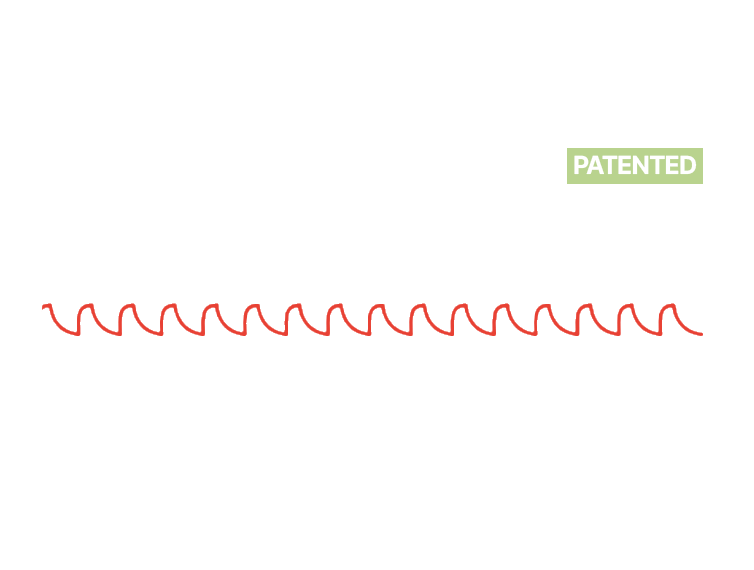
The patented pump drying from Alent Dynamic alternates between short intervals where fans and ventilation run at full power, and longer intervals of rest.
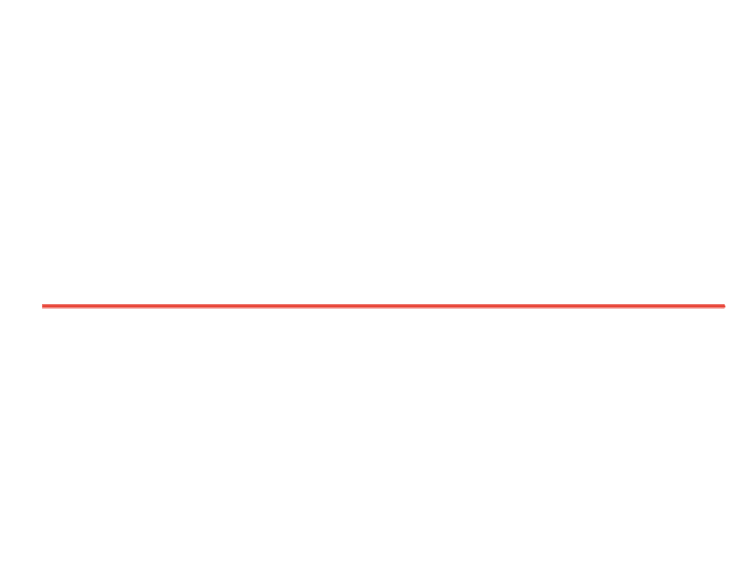
The wood is exposed to an uniterrupted flow of hot air from start to finish.
Wood drying process
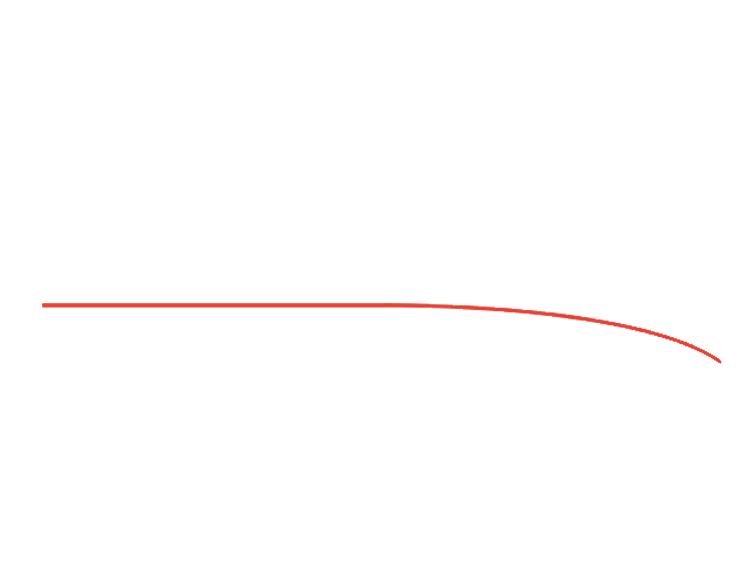
The fans are set to gradually slow down near the end of the drying process, but the flow of hot air remains constant.
The patented pump drying from Alent Dynamic alternates between short intervals where fans and ventilation run at full power, and longer intervals of rest.
We make two opposing forces work together
-
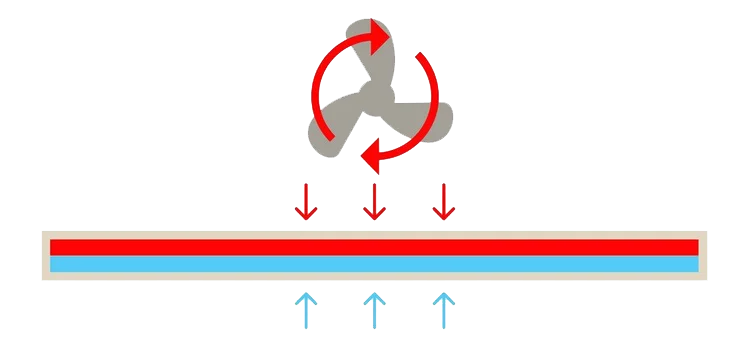
Conventional Drying Method
In conventional drying, hot air is continuously applied to the wood. This creates a constant high temperature on the surface, which is always hotter than the core. As a result, the heat works against the movement of moisture from the core to the surface, slowing the drying process. The uneven temperature and moisture levels cause stress on the wood, leading to quality degradation, such as cracks or twists. -
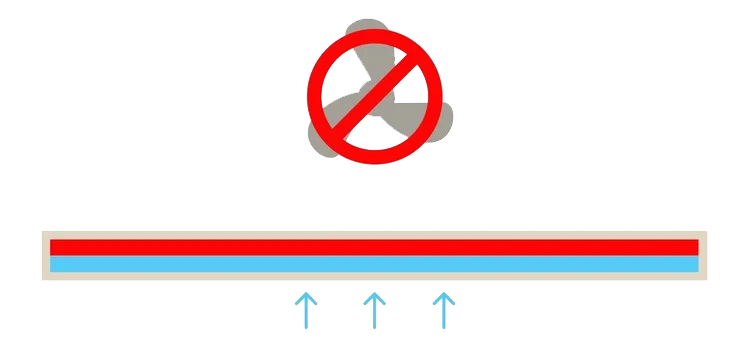
Alent Dynamic® Method: Step 1 - Surface Cooling by Evaporation
In the Alent Dynamic® method, after heating the wood to a high temperature, the fans are shut down. This allows the moisture from within the wood to evaporate, which cools down the surface. The temperature gradient begins to reverse, and now both the heat and moisture work together to speed up the drying process.
-

Alent Dynamic® Method: Step 2 - Stress Dissipation and Cycle Renewal
As the surface cools and moisture continues to migrate outward, the stress caused by the initial heating begins to dissipate. The surface of the wood is remoisturized, to balance both temperature and moisture levels. Once these gradients have evened out, a new cycle of controlled heating and resting begins, ensuring a higher quality end product without damage.

What this means for you
Save Time and Energy
Up to 20 - 40 % electricity
Up to 10 % heat energy
Up to 10% faster drying time
Easier to recognize issues within the kiln
Increase End-Product Quality
Less risk of deformation due to stress
Less wood discoloration
Fewer process-inflicted cracks
Straighter wood


“With Alent Dynamic we have achieved a 55% reduction in electricity consumption. Additionally, our drying process is 17% faster, increasing our drying capacity. A third key benefit of this method is the significantly reduced cracking and noticeably improved wood quality”
— Baltic Wood, Poland
This is one of the best investments you can make for your business and the environment
Check out these Frequently Asked Questions for more.
Questions about our method
-
The timber is subjected to brief, harmless stress periods and in between longer periods of rest or stress relief. Almost as repeated conditioning sessions. The drying process is enhanced by "pumping" that maintains a high moisture migration inside the timber without building up dangerous tensions. Water evaporates from the wood surface even during fan stop, but then taken heat from the wood rather than from the air. Wood surface is cooler than the interior of the timber, and this helps to increase moisture migration towards the surface. It is the vapor pressure that drives moisture migration. During the stop there is an adding force to the moisture migration due to the temperature gradient in the wood and drying is faster.
-
Non-official comparisons have been made and more are to come. Many of our customers have done comparisons before they ordered Alent Dynamic®. Others have taken note of fellow studies and subsequently invested in Alent Dynamic®.
-
No, despite that the fans are shut down half of the drying time with the Alent Dynamic® method. The energy saved do not need to be replaced with heat from the boiler. Just like our studies predicted we can now show that our customers are saving heat with Alent Dynamic®.
"I have noticed that during this time, the quality has improved significantly, but especially so has the heat consumption decreased by over 10% and it pleases me. All savings are great."
–Stefan Edström, owner Brännfors Träförädling. Uses Alent Dynamic® in four klins.
-
We can not escape that the water from the wood has to vaporize from the wood surface and the evaporation energy. A normal drying rate in a chamber dryer, 120 m3 of pine, 38x110 mm, 75-12% M.C. at -5 ° C outside temperature, draws more than 35 MWh of thermal energy. The evaporation part is almost 22 MWh. Warming pulls over 6 MWh and heating of fresh air just over 5 MWh. The remaining heat requirement is largely dependent on the building. Heat conduction through the door, walls, ceilings and floors may be 1-2 MWh. Large leaks and poor insulation require additional spraying that consume several MWh. The conditioning draws energy for evaporating of spraying water.
Alent Dynamic® has several advantages that reduce heat consumption:
+ Leakage is reduced when the fans are shut down
+ Heat loss through the walls, ceilings and especially port is substantially lower when the air is stationary
+ additional spraying is not needed with Alent Dynamic®
The fan motors adds no heat when they are stopped but you do not need to fully compensate for this. If you are drying to low wood moister content in an old kiln, you are saving heat with Alent Dynamic®. -
Item descriptionNo, Alent Dynamic® is based on intervals between rapid venting and rest. The timber average temperature is rather lower when drying dynamically. Psy is higher during the short active phase of the pumping but the long rest periods reduces cracking.
-
Yes, experiences show that the motors life span extends, rather than shortens. All indications are that life expectancy is increasing. The fan motor shut down in intervals of 10-60 minutes. There will be no extra stops for reversal. During these stops the internal motor temperature is decreased and it leads to a longer life. There is no risk of condensation on the engine even during long pump stop. To get condensation the motor temperature has to drop below the dew point temperature in the chamber and it is an impossibility, unless the engine is equipped with active cooling.
-
ItSince the fan motors are given time to cool down during 10-60 minutes when reversing, you can keep a higher dry temperature during drying without any harm to the motors. The set point in the dry temperature can be slightly higher than the corresponding temperature for conventional and “slow-down” drying methods because the average temperature in the timber during a cycle is a few degrees below the set point when using Alent Dynamic®. em description
-
No, the theory indicates and practice shows that the drying time is shortened. When drying to low moister content you can save days. n
-
No, far from it. Drives are normally running at 30-50 Hz when drying to lower moisture contents. That compares to Alent Dynamic® which stops the fans 50% of the drying time. In addition, drying time is decreased with Alent Dynamic®. When reducing the fan speed by drives you have to prolong the drying. cription
-
Item dNo, our follow-up surveys rather suggest a lower gradient. escription
-
The pay off time for installing the Alent Control system with Alent Dynamic® is normally one year. em description
-
During the rest periods the heat valve is closed and the air in the dryer is stationary. Leakage from the dryer decreases. Convection, i.e. heat conduction through walls and ceilings, decreases due to stagnant air layer next to walls and ceilings. Alent Dynamic® does not need spraying and it can save large amounts of heat, especially in older kilns with leakage. Conventional and “slow-down” drying methods schedules spraying can easily consume several MWh of heat.